

Inclusion: A Path of Practice
December, 2025
For me, it is all about inclusion.
We are living in a time of deep polarization, political, social, cultural, and spiritual. This has been building for a long time, but right now it feels intensified. Social media and news cycles amplify it: we see difference instantly, react instantly, and within minutes the whole world can be pulled into the reaction.
Our identities become externally reinforced. We feel grounded when others confirm our values, and when they do not, we often feel compelled to assert those values more strongly.
This is human. There is nothing wrong with protecting what feels true. Standing for who we are matters. However, I feel something is shifting. A deeper invitation is emerging.
Beyond Consensus
Rather than clinging to value systems or insisting on being right, we are being called into a deeper capacity: inclusion.
Much of what separates us is habit, conditioning, culture, faith, and upbringing. Beneath those layers, we share a common ground, one species, one nervous system, one field of consciousness expressing itself through many forms. For centuries, perhaps millennia, humanity has been moving toward embodying this realization. My work is part of that movement.
This is not inclusion through consensus. Not a negotiated middle ground or compromise. Consensus has value, but it does not free us from reactivity. Inclusion invites us into a deeper freedom, where difference can coexist without threat.
There is something beyond consensus.
Equanimity
In Buddhism, this deeper ground is called equanimity.
Equanimity is the capacity to rest in wholeness while differentiation remains intact. It is not conceptual understanding. It is an embodied knowing in which body and mind recognize themselves as part of one organism, One Mind, while allowing difference to exist. Living from this place is difficult because it confronts the fear beneath all exclusion:
What about me?
The Poisons
At the core of the human psyche lives the instinct to protect a sense of separate self, I, me, mine. This instinct is natural. But when it operates unconsciously, it becomes fearful, reactive and competitive.
We compare ourselves to others. We grow jealous, resentful, bitter, and prideful. We attempt to secure our worth by gaining more, sometimes at the expense of others.
Buddhism names these dynamics the poisons:
ignorance, greed, anger, jealousy, and pride.
Ignorance sits at the center, not as lack of intelligence, but as forgetting our shared nature. From this forgetting, we act from discomfort and desire. Without awareness, these actions create more delusion and more suffering, for ourselves and for others.
The Practice of Inclusion
When awareness enters, something shifts.
We begin to recognize our impulses instead of being ruled by them. We rediscover choice. We learn to tolerate the natural movement between comfort and discomfort without letting it define our actions.
This is inclusion.
It is the practice of staying present with fear, the fear of loss, the fear of exclusion, the pain of disconnection, the pain that arises when someone we depend on is unavailable. Not clinging. Not pushing. Not collapsing into stories of unfairness. It is learning to stay intimate with raw experience itself, without adding narrative. Because it is the story that solidifies the sense of a separate self.
It is within narrative that identity hardens, and separation begins.
Inclusion begins when we stay with direct experience, without clinging and adding narrative.
This is my work, with myself and with others.
It requires deep listening, and a willingness to meet the poisons within us with awareness and a lot of compassion for our fears and open wounds.
This is the practice I am growing.
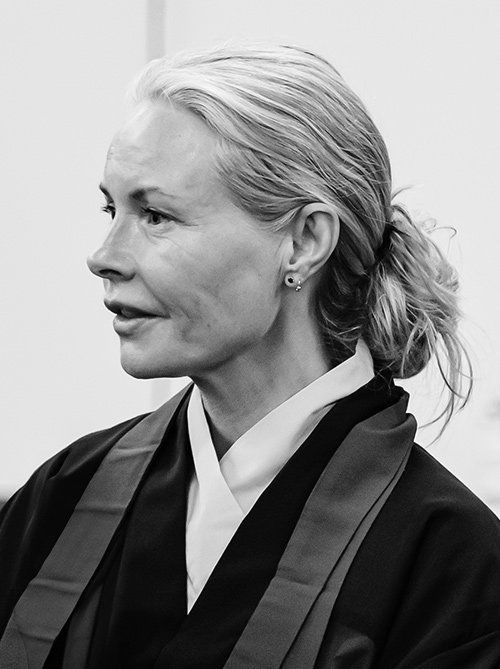
Charlotte Jigen Juul
I am a Zen priest with a MA in Contemplative Psychotherapy and Buddhist Psychology from Naropa University, Boulder, Colorado, USA and a BA in Psychosynthesis from “The Psychosynthesis and Education Trust” in London. Besides that, I am a certified SE-Practitioner (SEP), in Trauma Psychology, Somatic Experience (SE-practitioner, Peter Levine), I am a certified BigMind Facilitator by Zen Master Genpo Roshi and became an “Ordained Zen priest” in 2018.
Recent Posts
When God and Zen Come Together
Why I Work With the Poisons 3: Where We Separate Is Also Where We Meet
Why I Work With the Poisons 2: Turning Toward What Is Underneath
Why I Work With the Poisons 1: I Polarize Too
The Role of My Home Zendo